Predict, Diagnose, and Treat Chronic Kidney Disease with Machine Learning: a Systematic Literature Review
Abstract
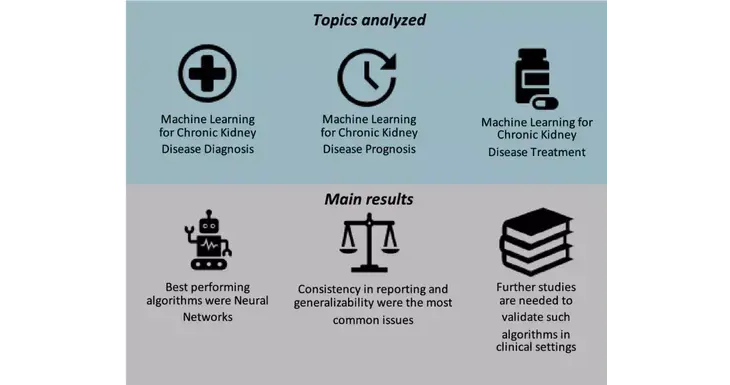
Objectives: In this systematic review we aimed to assess how artificial intelligence (AI), including machine learning (ML) techniques, has been deployed to predict, diagnose, and treat chronic kidney disease (CKD). We systematically reviewed the available evidence on these techniques to improve CKD diagnosis and patient management.
Methods: We included English-language studies retrieved from PubMed. This review is therefore classified as a rapid review, as it used one database and language restrictions; given the novelty and importance of the topic, missing relevant papers was considered unlikely. We extracted 16 variables, including main aim, studied population, data source, sample size, problem type (regression or classification), predictors, and performance metrics. We followed the Preferred Reporting Items for Systematic Reviews (PRISMA) approach, and all main steps were done in duplicate.
Results: From 648 studies initially retrieved, 68 met the inclusion criteria. Reported models generally performed well, but metrics were heterogeneous across papers, so direct comparison was not feasible. The most common objective was prognosis prediction, followed by CKD diagnosis. Algorithm generalisability and testing across diverse populations were rarely addressed. Clinical evaluation and validation were uncommon: only 6 of 68 included studies were performed in a clinical context.
Conclusions: Machine learning is a promising tool for risk prediction, diagnosis, and therapy management in CKD. Future work is needed to improve interpretability, generalisability, and fairness so these technologies can be safely used in routine clinical practice.